Table of Contents
ToggleChandler’s warm Arizona climate and sprawling suburban neighborhoods create a perfect breeding ground for pests, scorpions, termites, carpenter ants, and roof rats treat homes like five-star resorts. If you’ve spotted droppings in your pantry, heard scratching in the walls, or found mysterious damage to your drywall, you’re not alone. Most Chandler homeowners face at least one pest crisis in any given year. The good news? You don’t have to call an exterminator on day one. Many infestations can be identified, contained, and eliminated with smart DIY strategies, proper tools, and honest-to-goodness elbow grease. This guide walks you through diagnosing pest problems, tackling them yourself when feasible, and knowing exactly when to bring in the pros.
Key Takeaways
- Chandler’s hot desert climate and moisture pockets attract scorpions, termites, carpenter ants, and roof rats, but many infestations can be managed with DIY strategies before calling a professional.
- Early identification using simple tools—like UV flashlights for scorpions and visual inspections for mud tubes and damage—is critical to catching pest problems before they cause costly structural damage.
- Sealing entry points with caulk, metal mesh, and hardware cloth, removing moisture sources, and maintaining a 12-inch clear zone around your home’s foundation are essential prevention strategies for Chandler pest control.
- DIY treatments like targeted insecticides for scorpions, termiticides for mud tubes, and snap traps for roof rats work effectively for small infestations, but professional pest control is necessary for termites, carpenter ants in walls, and widespread cockroach problems.
- Natural alternatives like diatomaceous earth and borax-based baits cost $20 to $50 and work for minor issues, but require patience and repeated application—professional treatment remains more reliable for severe infestations.
Why Chandler Homeowners Face Unique Pest Challenges
Chandler sits in the Sonoran Desert where the climate is hot, dry, and occasionally monsoon-prone, conditions that attract specific pest species year-round. Temperatures regularly exceed 110°F in summer, yet homes with air conditioning create moisture pockets that pests exploit. Autumn and winter bring cooler weather, pushing scorpions and insects indoors seeking warmth and water sources.
The region’s rapid suburban expansion means older neighborhoods sit next to desert scrubland, providing direct pathways for wildlife migration. Many homes are built on concrete slabs without traditional crawlspaces, which complicates both pest entry routes and treatment options. Chandler’s water-rich landscaping, pools, irrigation systems, fountain features, attracts termites, carpenter ants, and mosquitoes that thrive in moisture.
Construction booms also mean frequent deliveries, open loading docks, and shared walls in newer developments. Pests spread faster when homes are packed tightly together. The result: what starts as a neighbor’s termite problem becomes your structural vulnerability within months if left unchecked.
Common Pests in Chandler and How to Identify Them
Arizona Bark Scorpions are the primary concern in Chandler. They’re tan or light brown, about 2 to 3 inches long, and favor warm, humid spots like bathrooms, laundry rooms, and under sinks. Look for them with a UV flashlight (they glow under ultraviolet light), this is your best field identification tool. Their sting causes localized pain and tingling: only seek medical attention if you’re allergic or stung on the face.
Termites cause thousands of dollars in structural damage before homeowners notice. Subterranean termites (the most common type in Chandler) build mud tubes along foundation walls and wooden supports. Inspect your crawlspace, piers, and wooden framing for pencil-thick mud tunnels. If you tap an infested joist, it sounds hollow and may crumble. Drywood termites leave pellet-like droppings the size of sand grains near entry points.
Carpenter Ants are larger than regular ants, about 0.5 to 1 inch long, and typically black or reddish. They carve galleries inside wood for nesting, leaving sawdust piles and small exit holes. Unlike termites, they don’t eat wood: they hollow it out. Find them active at night near light sources, wood sources, or along baseboards.
Roof Rats leave droppings that are 0.25 to 0.5 inches and pellet-shaped. They chew through insulation, wiring, and wood framing, creating fire hazards. Listen for scurrying sounds in attics and walls at dusk and dawn. Check soffit vents and roof penetrations for chew damage or holes larger than 0.25 inches.
Cockroaches (German and American varieties) appear in kitchens, under appliances, and in cabinets. They leave dark, pepper-like droppings and a distinctive musty odor. They’re most active at night: if you see them during daylight, the infestation is severe.
DIY Pest Control Methods That Actually Work
Safety first: Wear nitrile gloves, safety goggles, and an N95 mask when handling pesticides or disturbing infested areas. Ensure good ventilation: open windows and use a fan to direct spray outdoors.
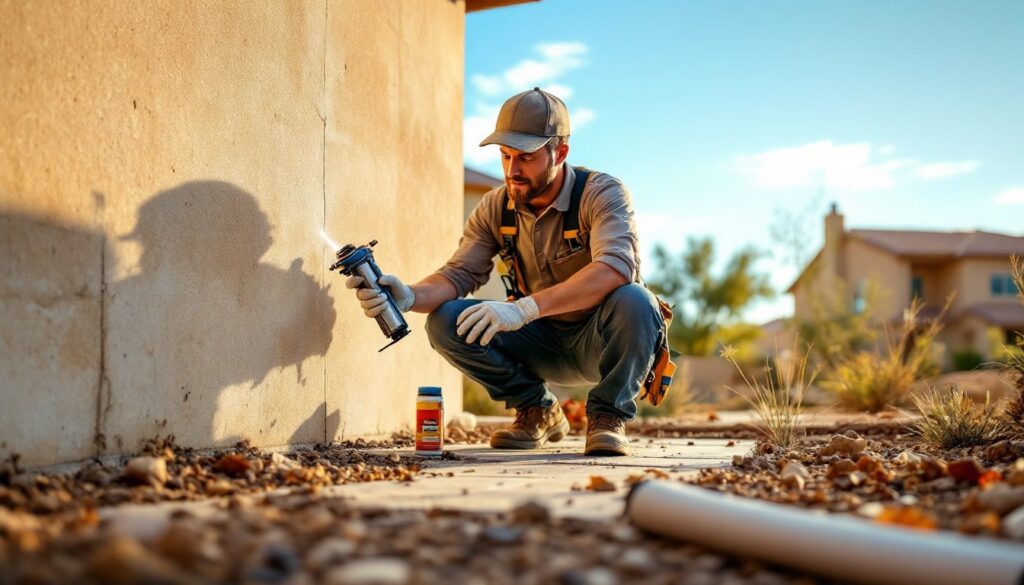
For Scorpions and Insects, target entry points and harborages. Use a caulk gun with silicone-based caulk to seal cracks around baseboards, window frames, and door thresholds. Remove clutter, woodpiles, and debris where scorpions hide. Apply a residual insecticide (pyrethrin or permethrin-based) around the perimeter of your home’s foundation, focusing on entry points. Reapply every 4 to 6 weeks or after rain. Spray indoor baseboards and dark corners where pests congregate, but avoid bedding and food prep surfaces.
For Termites, early detection saves thousands. If you spot mud tubes, do not break them, spray inside with a termiticide labeled for subterranean termites (fipronil or imidacloprid formulations work well). Inject the spray into the tube itself using a handheld pump sprayer. For drywood termites in isolated wooden trim or furniture, a borate treatment (like Tim-bor) is effective on exposed wood surfaces. Apply it as a liquid to wood surfaces and let it absorb: the wood becomes toxic to termites for years.
For Carpenter Ants, locate the nest first. Follow worker ants at night back to their entry point using a flashlight. Once found, drill a small hole into the gallery and inject an ant bait labeled for carpenter ants or a liquid insecticide directly into the cavity. Seal the hole with caulk after treatment. For extensive damage, consult a professional, structural integrity is at stake.
For Roof Rats, install snap traps or electronic traps in attics and wall voids. Bait them with peanut butter or dried fruit. Check traps daily. Simultaneously, seal entry holes larger than 0.25 inches using steel mesh, caulk, or hardware cloth. Rats can gnaw through plastic and wood, so use only metal or cement-based sealants. Remove food sources: keep pet food sealed, clean up fallen fruit, and secure garbage cans.
Critical: Always read and follow label instructions on all pesticides. Improper application or overdosing doesn’t improve results and can harm you, your family, and pets.
Prevention Strategies for Long-Term Protection
Prevention beats treatment every time. Start with exclusion, sealing your home against entry. Walk your exterior monthly, looking for gaps around utility penetrations, loose soffit vents, damaged window seals, and foundation cracks larger than 0.25 inches. Seal everything with silicone caulk, metal mesh, or expanding foam, then cap with trim or siding.
Remove pest attractants inside and out. Store pantry items in airtight containers: don’t leave pet food exposed. Fix leaky faucets and pipes, moisture is a magnet for termites and carpenter ants. Ensure your gutters and downspouts direct water at least 4 feet away from the foundation. If you have a crawlspace, install a vapor barrier (6-mil polyethylene sheeting) to reduce moisture and make the space less hospitable to termites.
Outdoors, maintain a 12-inch clear zone around your home’s perimeter. Remove dead wood, fallen branches, and stored lumber from near the house. Trim vegetation so it doesn’t touch siding or roof overhangs, pests use plants as highways. Keep mulch at least 12 inches away from foundation walls. If you use mulch, choose materials like cedar or cypress, which are naturally repellent to some pests.
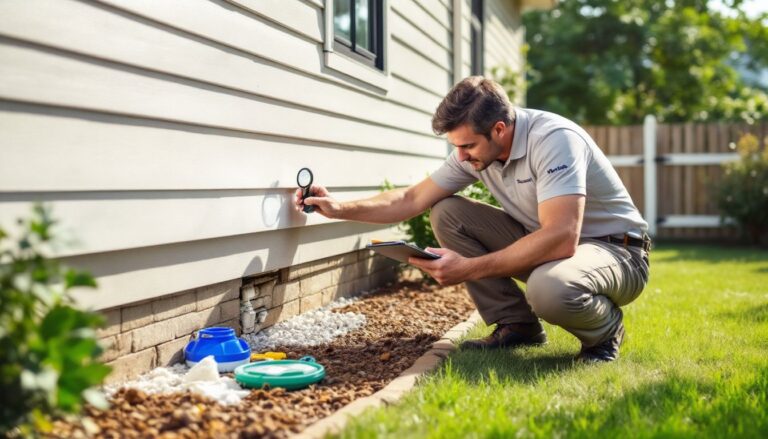
Schedule annual inspections of your attic, crawlspace, and foundation. Look for pest activity early when populations are small and treatment is simple. Document what you find with photos and notes: this information is invaluable if you eventually hire a professional. Regular vigilance catches infestations when they’re manageable.
When to Call a Professional Pest Control Service
Know your limits. If you’ve spotted active termite mud tubes or significant wood damage, call a professional immediately. Termite treatment often requires specialized equipment, and structural repairs may need a licensed contractor. Termites can cost $1,000 to $10,000+ to treat, depending on extent: delay makes it worse.
For carpenter ant infestations in walls or structural framing, a professional can locate nests using acoustic listening devices and thermal imaging, tools most homeowners don’t have. Similarly, if you suspect roof rats in your walls but can’t locate the nest, professionals have experience and can access spaces you can’t safely reach.
Persistent cockroach problems across multiple rooms typically require professional treatment. Cockroaches reproduce quickly and develop resistance to over-the-counter sprays. A licensed pest control company can rotate pesticides and use proven baiting strategies.
Many Chandler homeowners prefer professional treatment for peace of mind, especially for scorpions (due to allergy risk) or when selling a home. Review top pest control specialists in Chandler, AZ to find licensed, insured companies. Ask about warranties (reputable firms guarantee their work for 30 to 90 days). Some treatments require follow-up visits: confirm schedules upfront.
Front-load the conversation: tell the company about any children, pets, or health sensitivities. Professional-grade products are stronger than retail versions, but safety protocols should be non-negotiable.
Budget-Friendly Alternatives and Natural Solutions
If you’re committed to natural or lower-cost approaches, several methods work, though results are slower than chemical treatments.
Diatomaceous Earth (Food Grade) kills soft-bodied insects by damaging their exoskeleton. Sprinkle it along baseboards, under furniture, and around entry points. Reapply after vacuuming or rain. It’s non-toxic to humans and pets but must contact the insect directly to work. Expect 5 to 10 days for effect.
Borax-Based Baits are cheap and effective against cockroaches and ants. Mix borax powder with powdered sugar and a small amount of water to form a paste. Dab it on cardboard and place it near pest activity (out of reach of children and pets). Ants and roaches carry the bait back to their nest, poisoning the colony. Results take 1 to 2 weeks.
Essential Oils like peppermint, tea tree, and lavender deter (but don’t kill) some pests. Mix 10 to 15 drops of essential oil with water in a spray bottle and apply to baseboards and entry points. Effectiveness is debated: they’re best used as a supplementary deterrent, not a primary treatment.
Sticky Traps for insects and rodents are inexpensive and non-toxic. Place them along walls where pests travel. They capture pests but don’t eliminate colonies, useful for monitoring rather than solving.
Physical Removal: For scorpions, use a stick or broom to gently guide them into a container, then release outdoors at least 1 mile away. It’s free, safe, and humane, though some folks understandably prefer not to handle them.
Natural solutions typically cost $20 to $50 in supplies, versus $200 to $500+ for professional treatment. The trade-off: they require patience, repeated application, and persistence. If an infestation is severe or spreading, natural methods alone may not suffice.
Conclusion
Chandler’s desert heat and suburban density make pest problems inevitable, but they’re not unmanageable. Start with proper identification, move to targeted DIY treatment when the infestation is small, and don’t hesitate to call in professionals for structural threats like termites or widespread infestations. Prevention, sealing entry points, removing attractants, and regular inspections, is your best long-term defense. Whether you choose chemical treatments, natural alternatives, or a mix of both, acting early keeps pests from gaining a foothold. Your home is your investment: protect it with knowledge, vigilance, and the right tools.